
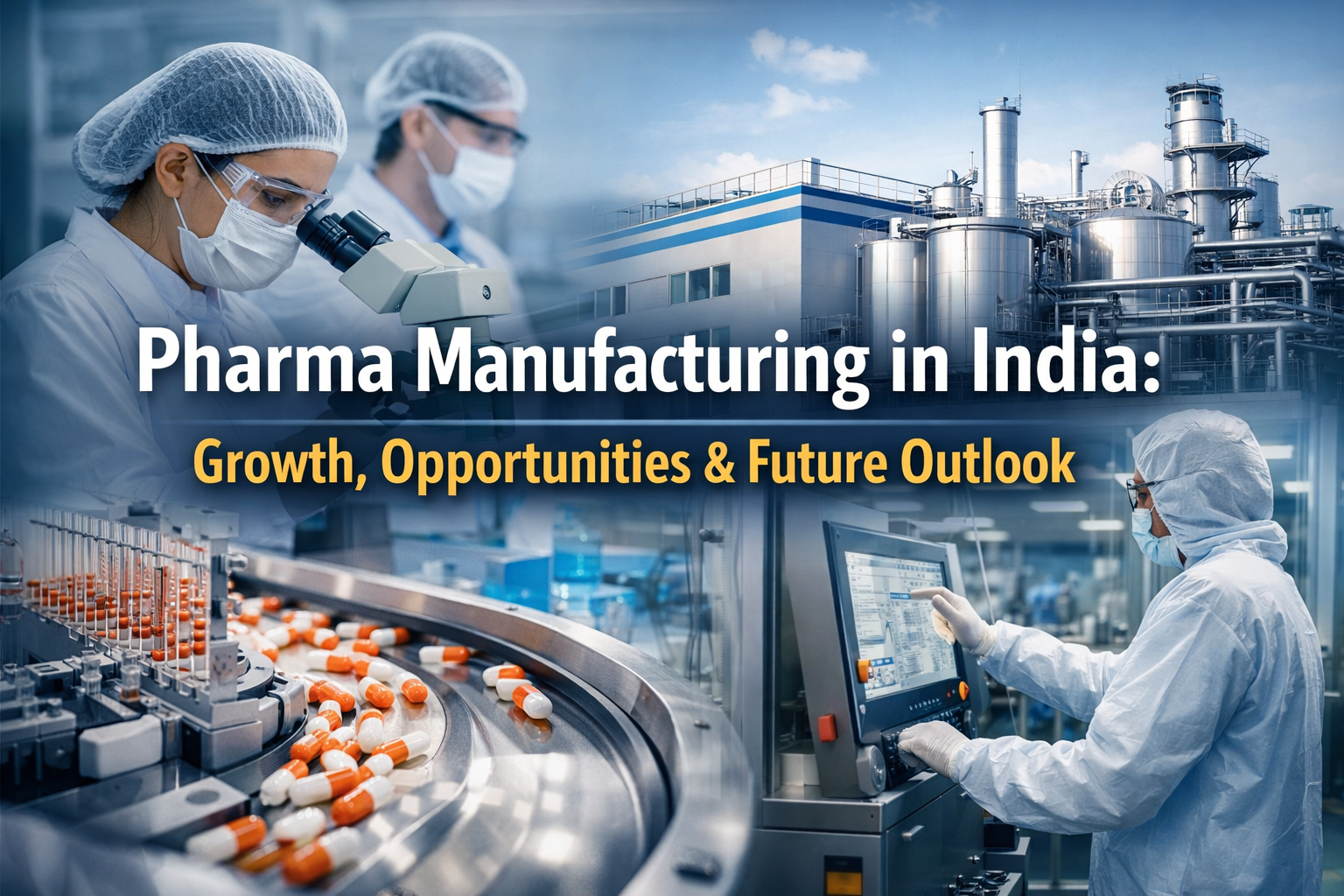
The global healthcare system runs on reliability, scale, and precision. Few countries embody these qualities as effectively as India. Over the last two decades, pharma manufacturing in India has evolved into a cornerstone of global medicine supply, serving both domestic and international markets with consistency and quality.
From generic medicines to vaccines and complex formulations, India has positioned itself as a strategic manufacturing hub for the world.
The Evolution of Pharma Manufacturing in India
The growth of pharma manufacturing in India did not happen overnight. It is the result of strong policy support, technical expertise, and an expanding industrial base.
India currently ranks among the top pharmaceutical producers globally by volume. The country supplies medicines to more than 200 countries and fulfills a significant share of global demand for generic drugs and vaccines. This scale has strengthened India’s reputation as a dependable supplier in both developed and emerging markets.
A combination of affordability and compliance has been the defining strength of pharma manufacturing in India. Facilities across the country operate under WHO-GMP guidelines, and many are approved by international regulatory authorities such as the US FDA and MHRA.
Key Growth Drivers
1. Expanding Domestic Market
India’s large population, growing middle class, and increasing healthcare awareness are driving consistent demand for pharmaceutical products. Rising cases of chronic diseases such as diabetes and cardiovascular disorders further support long-term medication demand.
This internal consumption base provides a stable foundation for pharma manufacturing in India, reducing overdependence on exports.
2. Global Demand for Generics
As patents expire in major markets like the United States and Europe, the demand for affordable generic alternatives continues to rise. Indian manufacturers are globally recognized for producing high-quality generics at competitive costs.
This capability has made pharma manufacturing in India a preferred choice for multinational companies seeking cost-effective production.
3. Government Initiatives and Policy Support
Strategic government initiatives have strengthened domestic production capacity. Programs such as Production Linked Incentive schemes and Bulk Drug Parks encourage investment in Active Pharmaceutical Ingredient production and infrastructure development.
Such policies aim to reduce import dependency and make pharma manufacturing in India more self-reliant and globally competitive.
4. Skilled Workforce and Technical Expertise
India produces thousands of pharmacy graduates, chemists, and life science professionals every year. This talent pool supports research, development, quality assurance, and large-scale production.
The availability of skilled professionals at competitive costs enhances the efficiency of pharma manufacturing in India across multiple therapeutic segments.
Emerging Opportunities
The industry is not only expanding in size but also evolving in scope.
1. Third-Party and Contract Manufacturing
Outsourcing production has become a strategic move for many pharmaceutical brands. Third-party pharma manufacturing in India allows companies to scale quickly without investing heavily in infrastructure.
This segment is growing steadily due to flexible production capacity, regulatory compliance, and cost advantages.
2. API Manufacturing Expansion
Active Pharmaceutical Ingredients form the backbone of medicine production. Increasing focus on domestic API production has opened significant opportunities for investment and expansion.
Strengthening API capacity will further solidify pharma manufacturing in India as an integrated and self-sufficient ecosystem.
3. Biologics and Specialty Drugs
The future of pharmaceuticals is shifting toward biologics, biosimilars, and specialty drugs. Indian manufacturers are investing in advanced facilities and biotechnology capabilities to capture this high-value segment.
As technological expertise increases, pharma manufacturing in India is expected to expand beyond generics into more complex formulations.
4. Export Growth in Emerging Markets
Emerging economies in Africa, Latin America, and Southeast Asia present growing demand for affordable medicines. Indian companies are well-positioned to meet these needs due to their pricing advantage and regulatory adaptability.
Export diversification reduces risk and enhances long-term sustainability.
Technological Advancements Transforming the Sector
Technology is reshaping production processes across the industry.
Automation and Smart Manufacturing
Modern facilities increasingly use automated production lines, reducing human error and improving batch consistency. Real-time monitoring systems ensure compliance and product quality.
Digital transformation is enhancing efficiency across pharma manufacturing in India, making operations faster and more reliable.
Data Integrity and Compliance
Regulatory authorities worldwide emphasize strict documentation and traceability. Companies are adopting digital systems to maintain data accuracy and transparency.
Improved compliance strengthens global trust in pharma manufacturing in India and supports continued export growth.
Sustainable Manufacturing Practices
Environmental sustainability is becoming central to pharmaceutical production. Investments in waste management systems, energy efficiency, and green chemistry practices are increasing.
Sustainable operations not only meet regulatory requirements but also enhance long-term viability.
Challenges Facing the Industry
Despite strong growth, the sector faces certain challenges.
Regulatory Scrutiny
International regulatory inspections require strict adherence to quality standards. Non-compliance can impact export approvals and reputation.
Maintaining consistent quality remains critical for sustaining leadership in pharma manufacturing in India.
Pricing Pressure
Government price controls and global competition can compress profit margins, particularly in generic drugs.
To offset this, manufacturers are moving toward complex generics and specialty products with higher value margins.
Supply Chain Risks
Dependence on certain imported raw materials can create vulnerabilities. Diversifying sourcing and strengthening domestic API production are key strategies to address this issue.
Future Outlook of Pharma Manufacturing in India
The outlook remains highly optimistic.
India is expected to increase its share in global pharmaceutical exports over the coming years. Continued infrastructure development, policy support, and technological adoption will strengthen production capacity.
Complex generics, injectables, oncology drugs, and biosimilars are likely to drive the next phase of growth. At the same time, digital integration and artificial intelligence may enhance quality control, reduce production downtime, and optimize supply chains.
As global healthcare demand rises, pharma manufacturing in India will continue to play a strategic role in ensuring medicine accessibility and affordability worldwide.
Why India Remains a Global Manufacturing Hub
Several structural advantages keep India competitive:
- Cost-effective large-scale production
- Strong regulatory compliance framework
- Skilled and abundant workforce
- Government-backed manufacturing incentives
- Expanding API and formulation capabilities
These factors collectively reinforce the long-term strength of pharma manufacturing in India.
Conclusion
The journey of pharma manufacturing in India reflects resilience, innovation, and strategic growth. From supplying essential generics to advancing into biologics and specialty drugs, the industry continues to evolve.
With expanding domestic demand, rising exports, technological upgrades, and supportive government policies, India is well-positioned to remain a dominant force in global pharmaceutical production.
For businesses seeking reliable manufacturing partnerships, India offers a balanced combination of quality, scalability, and regulatory expertise. The future of pharma manufacturing in India is not just promising. It is transformative.