
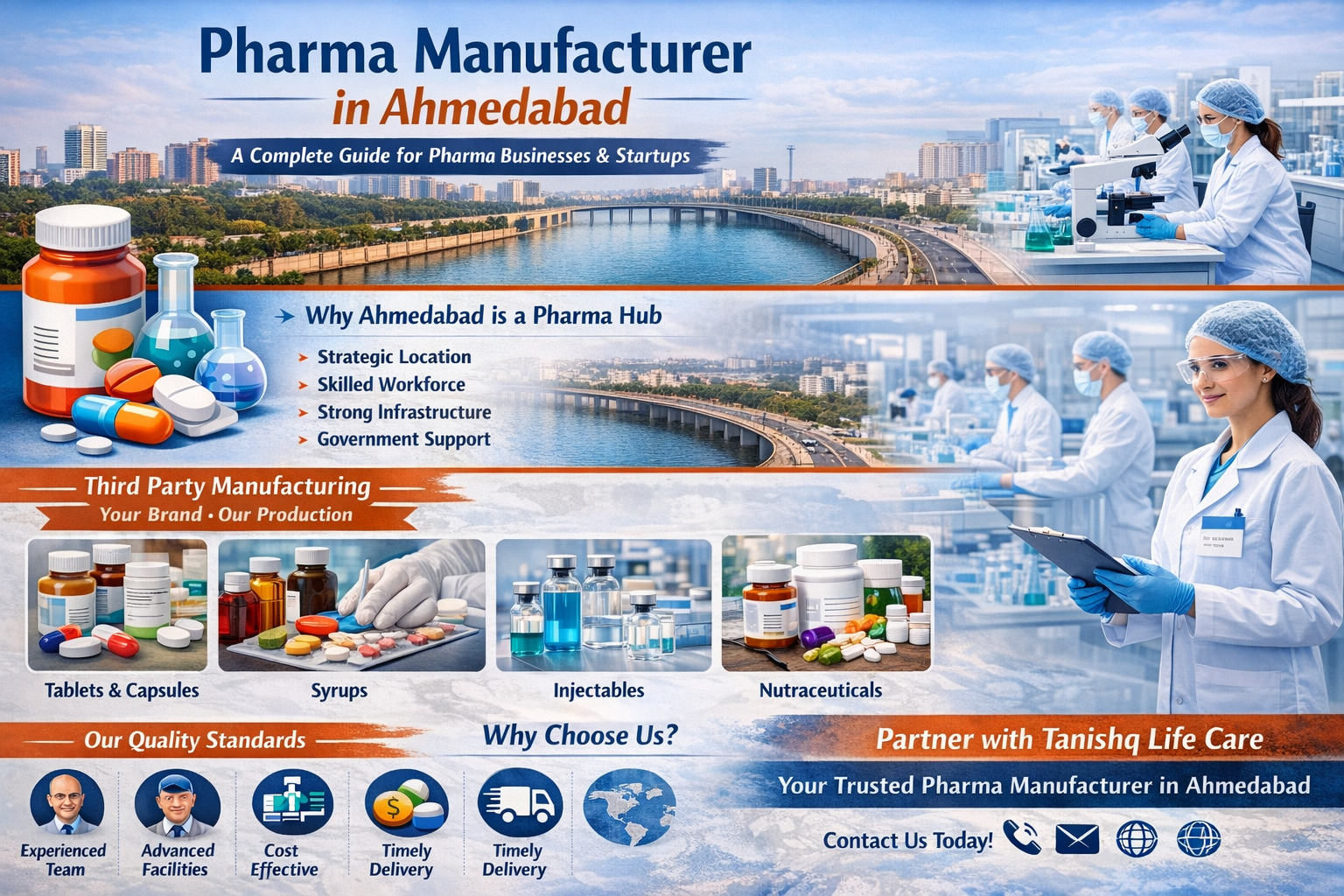
India’s pharmaceutical sector often gets called the “Pharmacy of the World.” From generic medicines to advanced formulations, Indian manufacturers supply healthcare products to dozens of countries. Within this thriving ecosystem, the city of Ahmedabad has emerged as one of the most important pharmaceutical manufacturing hubs in the country.
For pharma startups, marketing companies, distributors, and healthcare entrepreneurs, choosing the right manufacturing partner is a critical decision. If you are searching for a reliable pharma manufacturer in Ahmedabad, this guide will help you understand the industry, its benefits, manufacturing processes, and how to select the right partner such as Tanishq Life Care.
Let’s explore everything you need to know.
Why Ahmedabad Is a Major Hub for Pharmaceutical Manufacturing
The pharmaceutical industry in Ahmedabad has experienced remarkable growth over the past two decades. Today, the city hosts hundreds of pharmaceutical companies involved in manufacturing, research, export, and contract production.
Several factors contribute to the success of Ahmedabad as a pharma manufacturing hub.
1. Strategic Location
Ahmedabad is located in the state of Gujarat, which is widely recognized as one of the leading pharmaceutical manufacturing states in India. The region offers excellent connectivity through highways, ports, and airports, making it easier for companies to distribute medicines both domestically and internationally.
2. Strong Pharmaceutical Ecosystem
The city has a well-established ecosystem that includes raw material suppliers, packaging companies, research laboratories, and logistics providers. This integrated network allows pharmaceutical manufacturers to operate efficiently and maintain high production standards.
3. Skilled Workforce
Ahmedabad is home to numerous universities and pharmaceutical colleges that produce highly skilled pharmacists, chemists, and quality control professionals. These experts contribute significantly to maintaining global manufacturing standards.
4. Government Support
The Indian government actively supports the pharmaceutical industry through initiatives that encourage manufacturing and export growth in the sector of Pharmaceutical Manufacturing.
What Does a Pharma Manufacturer Do?
A pharmaceutical manufacturer is responsible for producing medicines and healthcare products according to strict regulatory and quality standards.
These manufacturers handle several important processes including:
- Research and development
- Formulation development
- Raw material sourcing
- Medicine manufacturing
- Quality testing
- Packaging
- Distribution
Many companies also offer third-party manufacturing or contract manufacturing, where they produce medicines on behalf of other pharmaceutical brands.
For startups or marketing companies, this model eliminates the need to invest in expensive manufacturing infrastructure.
Understanding Third Party Pharma Manufacturing
Third-party manufacturing is one of the fastest-growing business models in the pharmaceutical industry.
In this model, a company that owns a brand partners with a manufacturing company to produce medicines under its label.
Companies like Tanishq Life Care provide such services to pharma marketers and distributors.
Key Steps in Third-Party Pharma Manufacturing
- Product selection
- Quotation and agreement
- Documentation and licensing
- Manufacturing process
- Quality testing
- Packaging and delivery
This model allows businesses to focus on sales, marketing, and distribution, while the manufacturer handles production.
Advantages of Choosing a Pharma Manufacturer in Ahmedabad
There are many benefits to partnering with a pharmaceutical manufacturer in Ahmedabad.
Cost-Effective Production
Manufacturing costs in Ahmedabad are competitive compared to many other global pharmaceutical centers. This allows companies to maintain healthy profit margins.
High Quality Standards
Most pharmaceutical companies in Ahmedabad follow strict manufacturing practices such as GMP compliance.
The concept of Good Manufacturing Practice ensures that medicines are produced consistently and safely according to regulatory standards.
Large Product Range
Manufacturers typically offer a wide range of pharmaceutical formulations such as:
- Tablets
- Capsules
- Syrups
- Injections
- Ointments
- Nutraceuticals
- Ayurvedic medicines
Faster Production
With advanced manufacturing facilities and streamlined processes, pharma manufacturers can produce medicines quickly and efficiently.
Export Opportunities
Ahmedabad-based manufacturers export medicines to many countries around the world, strengthening India’s position in the global pharmaceutical market.
Pharmaceutical Manufacturing Process Explained
Producing medicines is a complex process that requires precision, expertise, and strict regulatory compliance.
Here is a simplified overview of the pharmaceutical manufacturing process.
1. Research and Development
The process begins with research and formulation development. Scientists determine the correct combination of ingredients needed to produce effective and safe medicines.
2. Raw Material Procurement
Pharmaceutical companies source active pharmaceutical ingredients and excipients from certified suppliers.
3. Formulation
The active ingredients are combined with other substances to create the final medicine form, such as tablets or capsules.
4. Production
Modern pharmaceutical facilities use advanced machines to ensure precise mixing, granulation, compression, and coating.
5. Quality Control
Before medicines are released into the market, they undergo rigorous quality testing to ensure safety and effectiveness.
6. Packaging
Packaging protects medicines from contamination and provides essential information to consumers.
7. Distribution
Once approved, medicines are distributed through pharmacies, hospitals, and distributors.
Types of Pharmaceutical Products Manufactured
Pharmaceutical manufacturers produce many types of healthcare products.
Tablets
Tablets are one of the most common dosage forms used worldwide.
Capsules
Capsules are preferred for many medications due to their easy consumption and rapid absorption.
Syrups
Liquid medicines are commonly used for children and elderly patients.
Injectables
These medicines are administered through injections and require extremely sterile manufacturing conditions.
Nutraceuticals
These include health supplements, vitamins, and dietary products that support overall wellness.
Quality Standards in Pharmaceutical Manufacturing
Quality is the most critical factor in pharmaceutical production.
Manufacturers follow strict international standards to ensure that every medicine produced is safe, effective, and reliable.
Some important quality standards include:
- GMP certification
- ISO certification
- Quality control testing
- Stability testing
- Batch traceability
These standards ensure that medicines meet regulatory requirements and protect patient safety.
How to Choose the Right Pharma Manufacturer
Choosing the right pharmaceutical manufacturing partner is essential for business success.
Here are some key factors to consider.
1. Certifications and Compliance
Always verify whether the manufacturer follows GMP standards and holds necessary certifications.
2. Manufacturing Infrastructure
Check the company’s manufacturing facilities, equipment, and production capacity.
3. Product Portfolio
A reliable manufacturer should offer a wide range of pharmaceutical products.
4. Quality Control Systems
Ensure that the company has strict quality testing procedures.
5. Reputation and Experience
Working with an experienced pharmaceutical manufacturer helps reduce risks and ensures smooth production.
6. Transparent Pricing
Clear pricing structures help businesses avoid unexpected costs.
Why Businesses Prefer Third Party Manufacturing
Third-party manufacturing has become a preferred choice for many pharmaceutical companies because it offers several advantages.
Lower Investment
Businesses do not need to invest in manufacturing plants, machinery, or large technical teams.
Faster Market Entry
Companies can launch products quickly by partnering with an established manufacturer.
Focus on Marketing
Pharma companies can concentrate on building their brand and expanding their market presence.
Scalability
Manufacturers can easily scale production based on demand.
Future of Pharmaceutical Manufacturing in India
The future of the pharmaceutical industry in India looks extremely promising.
Factors driving industry growth include:
- Increasing global demand for medicines
- Rising healthcare awareness
- Government support for domestic manufacturing
- Expansion of pharmaceutical exports
India continues to strengthen its position as a global pharmaceutical supplier, and cities like Ahmedabad play a major role in this growth.
Conclusion
Ahmedabad has established itself as one of India’s most important pharmaceutical manufacturing centers. With advanced infrastructure, skilled professionals, and strict quality standards, the city provides an ideal environment for pharmaceutical production.
For pharma startups, marketing companies, and distributors, partnering with a reliable manufacturer is essential to build a successful pharmaceutical brand.
Companies like Tanishq Life Care offer high-quality manufacturing services that help businesses bring safe and effective medicines to the market.
By choosing the right manufacturing partner, pharmaceutical businesses can expand their product portfolio, improve efficiency, and reach customers across India and around the world.