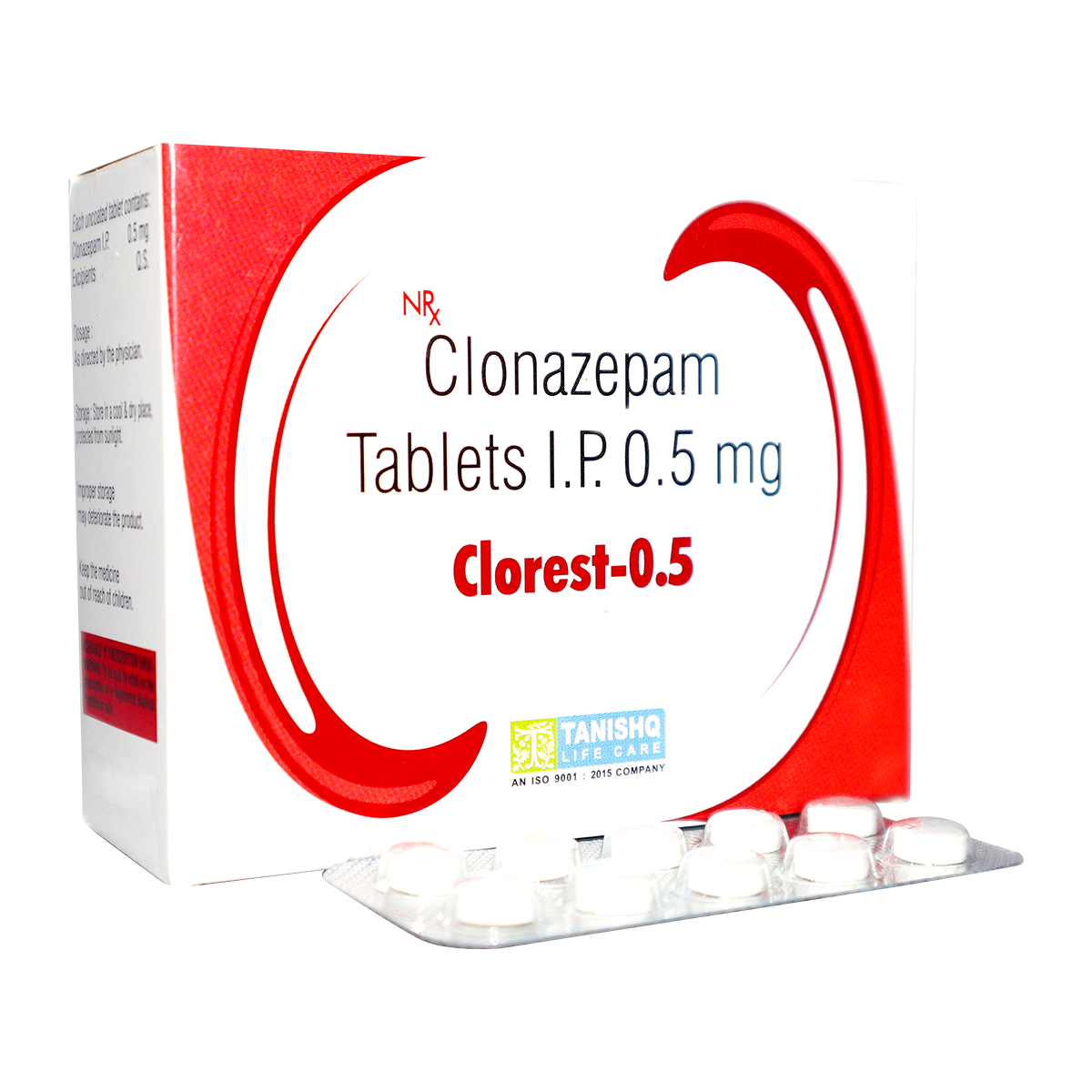
Clonazepam 0.5Mg Tablet
Clonazepam is a medication commonly prescribed for the treatment of anxiety disorders, panic disorders, and certain types of seizure disorders. It belongs to a class of medications called benzodiazepines, which work by enhancing the effects of a natural chemical in the body (GABA) that helps to calm the brain and nervous system.
- Recommended Usage
Indication
- Anxiety Disorders: Clonazepam is frequently used to manage generalized anxiety disorder (GAD), social anxiety disorder (SAD), and specific phobias. It helps to reduce the symptoms of anxiety, including excessive worry, nervousness, and restlessness.
- Panic Disorder: It is used to treat panic disorder, characterized by unexpected and repeated panic attacks. Clonazepam helps reduce the intensity and frequency of these attacks, providing significant relief from distress.
- Seizure Disorders (Epilepsy): Clonazepam is prescribed to control certain types of seizures, particularly absence seizures (petit mal) and myoclonic seizures. It works by calming the electrical activity in the brain that causes seizures.
Dosage and Administration
The typical starting dose for adults with anxiety or panic disorder is 0.25mg, which can be increased to 0.5mg once or twice daily.
For seizure disorders, the initial dose is usually 0.5mg per day, taken 1-3 times a day.
Precautions
Dependency and Tolerance: Clonazepam can cause physical dependence, particularly with long-term use. The risk of dependency is higher when taken at higher doses or for an extended period.
Sedation and Drowsiness: Clonazepam has sedative properties and may cause drowsiness, especially when starting the medication or when increasing the dose.
Alcohol Interaction: Alcohol can significantly increase the sedative effects of Clonazepam, leading to dangerous side effects such as respiratory depression, severe drowsiness, and impaired motor function.
Discontinuation: Clonazepam should not be stopped abruptly, as this can lead to withdrawal symptoms, including seizures, anxiety, insomnia, and tremors.
Key Benefits
Effective for Anxiety Disorders: Clonazepam is highly effective for reducing the symptoms of generalized anxiety disorder (GAD) and panic disorder, providing fast relief from excessive worry, nervousness, and panic attacks.
Panic Attack Control: It is one of the most effective medications for treating panic disorder, helping to reduce the frequency and severity of panic attacks, and improving the quality of life for individuals affected by this condition.
Seizure Control: Clonazepam is used to control seizure disorders, such as absence seizures, and is part of the management plan for epilepsy.
