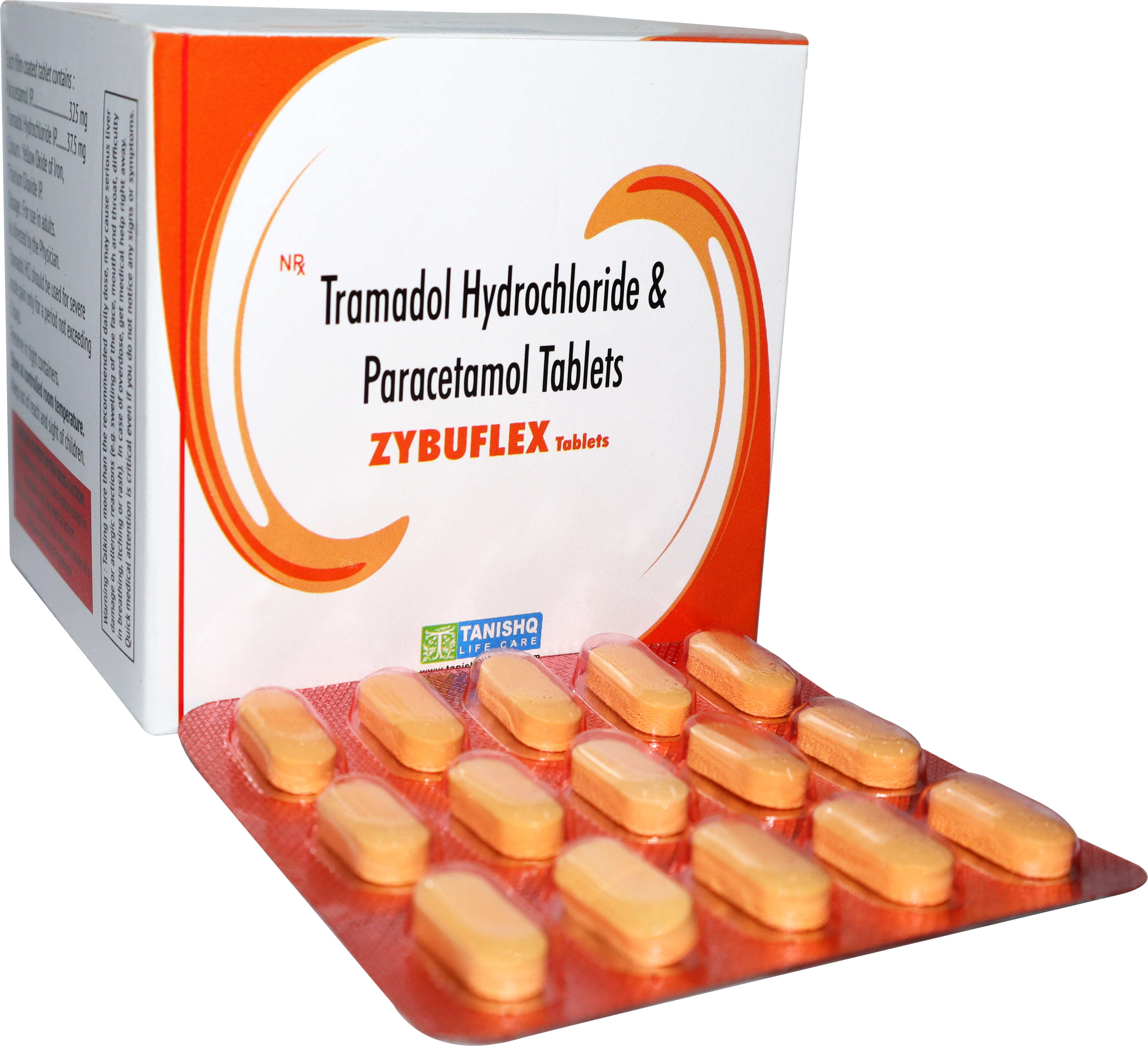
Zybuflex
This is a combination tablet containing Tramadol (37.5 mg) and Paracetamol (325 mg), which provides both analgesic (pain-relieving) and antipyretic (fever-reducing) effects.
- Tramadol is a opioid-like pain reliever that works by affecting the central nervous system. It binds to opioid receptors and also inhibits the reuptake of serotonin and norepinephrine, both of which play roles in pain modulation.
- Paracetamol (also known as acetaminophen) is a non-opioid analgesic and antipyretic that reduces pain and fever by acting on the central nervous system, blocking the production of prostaglandins.
This combination is typically used for managing moderate pain and can be helpful for conditions like musculoskeletal pain, post-operative pain, and pain from injuries.
- Recommended Usage
Indications
The Tramadol 37.5 mg + Paracetamol 325 mg tablet is commonly prescribed for:
Moderate pain relief such as::
o Back pain, muscle pain, arthritic pain, and joint pain.
o Post-surgical pain, toothaches, headaches, or migraines.
o Pain from injuries (e.g., sprains, strains, fractures).
Pain associated with conditions like:
o Osteoarthritis, fibromyalgia, and musculoskeletal disorders.
Dosage and Administration
Adults:
o The usual dose is 1 tablet (containing 37.5 mg of Tramadol and 325 mg of Paracetamol) every 4-6 hours as needed.
o Maximum dose: Do not exceed 8 tablets (equivalent to 300 mg of Tramadol and 2600 mg of Paracetamol) in a 24-hour period.
Elderly/Patients with Kidney or Liver Disease: Dosage adjustments may be required in elderly patients or those with renal or hepatic impairment. Consult a healthcare provider for proper dosage adjustments.
Precautions
Tramadol-Related Risks:
o Addiction, Abuse, and Misuse: Tramadol has the potential for addiction, misuse, and overdose. It should be used with caution, especially in individuals with a history of substance abuse.
o Central Nervous System (CNS) Effects: It can cause drowsiness, dizziness, and confusion. Do not operate heavy machinery or drive until you understand how the medication affects you.
o Serotonin Syndrome: There is a risk of serotonin syndrome, a potentially life-threatening condition, especially if taken with other medications that affect serotonin levels (e.g., SSRIs, SNRIs).
o Respiratory Depression: While less likely at therapeutic doses, Tramadol can cause respiratory depression. It should be used cautiously in patients with breathing problems or those taking other CNS depressants (like alcohol or sedatives).
