
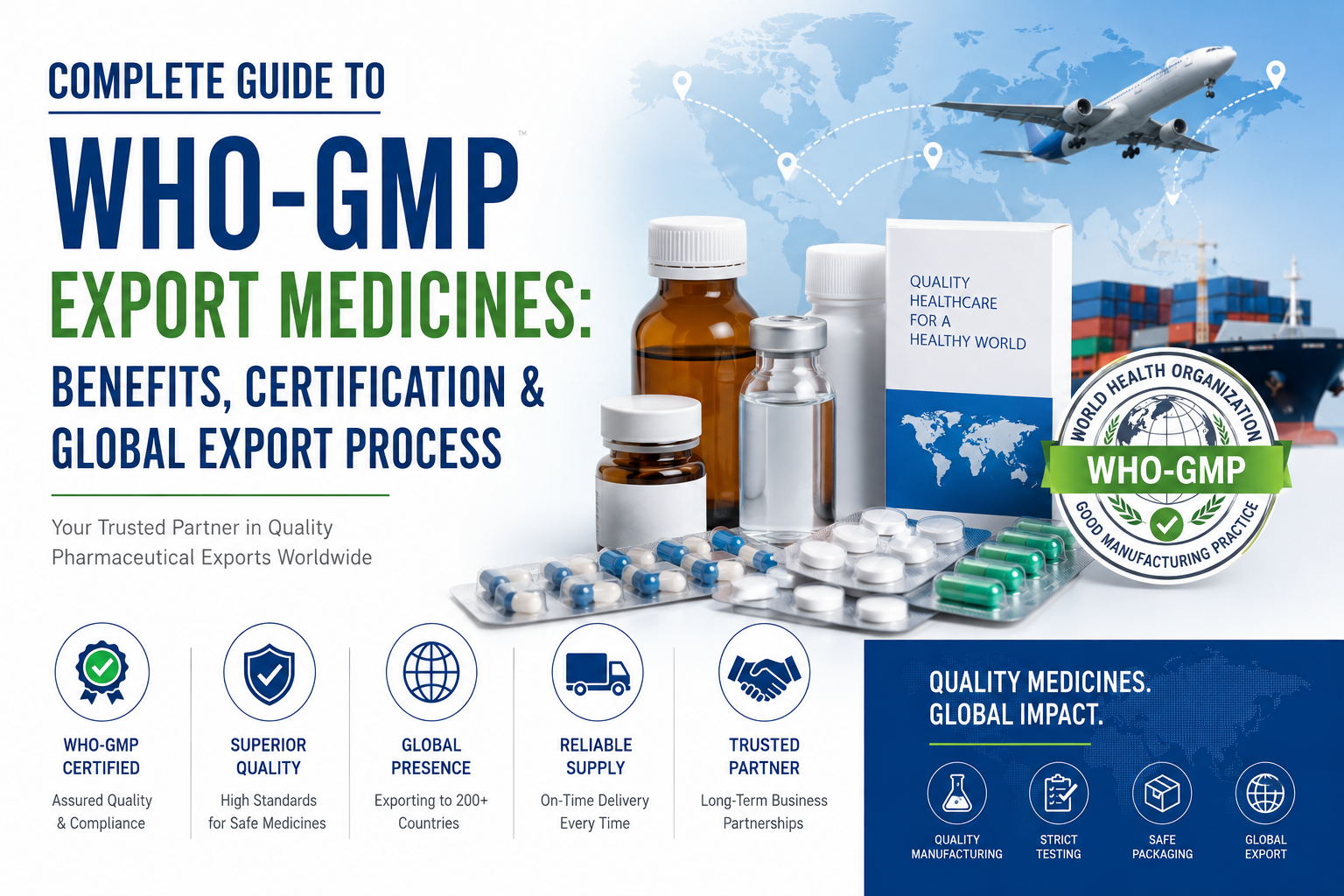
The global pharmaceutical industry depends on high-quality medicines that meet internationally recognized standards. Among the most trusted quality certifications is WHO-GMP (World Health Organization Good Manufacturing Practices), which ensures that medicines are manufactured under strict quality control, safety, and hygiene guidelines.
For healthcare organizations, importers, distributors, and government procurement agencies, choosing WHO-GMP export medicines is essential to ensure product quality, regulatory compliance, and patient safety.
India has emerged as one of the world’s leading pharmaceutical manufacturing and export hubs, supplying affordable, high-quality medicines to over 200 countries. Pharmaceutical companies with WHO-GMP certification have earned global recognition for producing reliable medicines that meet international standards.
In this guide, we’ll explore everything you need to know about WHO-GMP export medicines, their benefits, certification process, export procedures, and how to select the right pharmaceutical export partner.
What Are WHO-GMP Export Medicines?
WHO-GMP export medicines are pharmaceutical products manufactured in facilities that comply with the World Health Organization’s Good Manufacturing Practices (WHO-GMP) guidelines.
These guidelines ensure that every stage of production, from sourcing raw materials to packaging and storage, follows rigorous quality control measures.
WHO-GMP certification focuses on:
- Manufacturing consistency
- Product quality assurance
- Safe production practices
- Hygienic manufacturing environments
- Proper documentation
- Quality testing at every production stage
- Product traceability
Medicines manufactured under WHO-GMP standards are trusted by healthcare providers and regulatory authorities worldwide.
What Is WHO-GMP Certification?
WHO-GMP certification is an internationally recognized quality assurance system designed to ensure pharmaceutical products are consistently produced according to approved quality standards.
The certification verifies that a pharmaceutical manufacturer follows strict procedures for:
- Manufacturing operations
- Equipment validation
- Laboratory testing
- Quality management systems
- Staff training
- Documentation practices
- Storage conditions
- Packaging standards
A WHO-GMP-certified facility demonstrates its commitment to producing safe, effective, and high-quality medicines for domestic and international markets.
Why WHO-GMP Certification Matters for Medicine Exports
International buyers seek pharmaceutical manufacturers with WHO-GMP certification because it minimizes quality risks and improves regulatory acceptance.
Key reasons include:
1. Assured Product Quality
WHO-GMP-certified manufacturers maintain standardized production processes, ensuring every batch meets predefined quality specifications.
2. Improved Patient Safety
Strict quality control reduces contamination risks and manufacturing errors, resulting in safer medicines.
3. International Acceptance
Many countries require imported medicines to be manufactured in WHO-GMP-certified facilities before granting market approval.
4. Regulatory Compliance
WHO-GMP helps manufacturers comply with global pharmaceutical regulations, simplifying international trade.
5. Buyer Confidence
Importers and distributors prefer working with certified manufacturers because certification reflects reliability and long-term quality commitment.
Benefits of Choosing WHO-GMP Export Medicines
Selecting WHO-GMP-certified medicines offers numerous advantages for healthcare organizations and pharmaceutical distributors.
Superior Manufacturing Standards
Every production stage follows documented procedures that ensure consistency and product integrity.
Consistent Product Quality
Each batch undergoes extensive testing before release to ensure uniform quality and effectiveness.
Better Global Market Acceptance
WHO-GMP-certified medicines are accepted across many international markets, facilitating smoother regulatory approvals.
Reduced Supply Risks
Certified manufacturers implement strict quality systems that minimize production defects and recalls.
Enhanced Brand Reputation
Healthcare providers gain confidence in products manufactured under internationally recognized quality standards.
Why India Is a Global Leader in WHO-GMP Export Medicines
India is widely recognized as one of the largest exporters of generic medicines and pharmaceutical products.
Several factors contribute to India’s leadership:
- Advanced pharmaceutical manufacturing infrastructure
- Large number of WHO-GMP-certified manufacturing facilities
- Skilled scientific workforce
- Competitive manufacturing costs
- Strong regulatory framework
- Extensive export experience
- Wide range of pharmaceutical formulations
Today, Indian pharmaceutical companies export tablets, capsules, syrups, injections, ointments, nutraceuticals, and other healthcare products to markets across Asia, Africa, Europe, Latin America, and the Middle East.
WHO-GMP Export Process: Step-by-Step
Understanding the pharmaceutical export process helps importers make informed decisions.
Step 1: Product Selection
The buyer identifies pharmaceutical products based on market demand and regulatory requirements.
Step 2: Regulatory Documentation
The manufacturer prepares necessary export documentation, including:
- Product specifications
- Certificate of Pharmaceutical Product (CPP), if applicable
- Certificate of Analysis (COA)
- Manufacturing license
- WHO-GMP certificate
- Export invoices
- Packing list
Step 3: Quality Inspection
Finished products undergo laboratory testing to verify compliance with quality standards.
Step 4: Packaging and Labeling
Products are packed according to importing country regulations and international shipping standards.
Step 5: Customs Clearance
Export documentation is submitted to customs authorities before shipment.
Step 6: International Shipping
Medicines are transported through air or sea freight while maintaining appropriate storage conditions.
Key Documents Required for WHO-GMP Medicine Export
International pharmaceutical exports typically require:
- WHO-GMP Certificate
- Manufacturing License
- Drug License
- Certificate of Analysis (COA)
- Certificate of Pharmaceutical Product (CPP), where required
- Commercial Invoice
- Packing List
- Bill of Lading or Airway Bill
- Certificate of Origin
- Export Declaration
The exact documentation depends on the destination country’s regulatory requirements.
How to Choose a Reliable WHO-GMP Export Medicine Manufacturer
Selecting the right pharmaceutical export partner is critical for long-term business success.
Consider the following factors:
WHO-GMP Certification
Verify that the manufacturer operates WHO-GMP-certified production facilities.
Product Portfolio
Choose a supplier offering a comprehensive range of pharmaceutical products.
Export Experience
Experienced exporters understand international regulations, documentation, and logistics.
Quality Assurance
Ensure the company follows strict quality management systems and batch testing procedures.
Regulatory Support
Reliable exporters assist buyers with documentation and regulatory compliance.
Manufacturing Capacity
The manufacturer should have sufficient production capacity to meet growing demand.
Customer Support
Responsive communication and technical assistance contribute to successful long-term partnerships.
Industries That Use WHO-GMP Export Medicines
WHO-GMP-certified pharmaceutical products are supplied to:
- Pharmaceutical distributors
- Hospitals
- Government healthcare agencies
- NGOs
- Medical procurement organizations
- Retail pharmacy chains
- Healthcare institutions
- International pharmaceutical companies
Future of WHO-GMP Export Medicines
Growing healthcare demand and increasing regulatory standards continue to strengthen the importance of WHO-GMP-certified pharmaceutical products.
Emerging markets are expanding access to affordable medicines, creating new opportunities for certified pharmaceutical exporters. Manufacturers investing in quality systems, regulatory compliance, and innovation will remain competitive in the global pharmaceutical market.
Why Choose Tanishq Lifecare for WHO-GMP Export Medicines?
Tanishq Lifecare is committed to delivering high-quality pharmaceutical products that meet international quality standards. With a focus on reliability, regulatory compliance, and customer satisfaction, the company supports healthcare distributors, importers, and institutional buyers across global markets.
By emphasizing quality assurance, efficient supply chain management, and comprehensive export support, Tanishq Lifecare aims to build long-term partnerships with clients seeking dependable pharmaceutical solutions.
Frequently Asked Questions
What are WHO-GMP export medicines?
WHO-GMP export medicines are pharmaceutical products manufactured in facilities that comply with the World Health Organization’s Good Manufacturing Practices, ensuring high standards of quality, safety, and consistency.
Why is WHO-GMP certification important?
WHO-GMP certification demonstrates that a pharmaceutical manufacturer follows internationally recognized quality standards, increasing buyer confidence and facilitating exports.
Can WHO-GMP-certified medicines be exported worldwide?
Yes. Many countries recognize WHO-GMP certification as an important quality benchmark, although import requirements vary by country.
Why do international buyers prefer Indian pharmaceutical exporters?
India offers high-quality medicines, advanced manufacturing facilities, competitive pricing, and extensive experience in global pharmaceutical exports.
How do I choose a reliable WHO-GMP pharmaceutical exporter?
Evaluate the manufacturer’s certifications, export experience, product range, quality assurance systems, regulatory support, and ability to meet international compliance requirements.
Conclusion
WHO-GMP export medicines play a vital role in ensuring the global supply of safe, effective, and high-quality pharmaceutical products. For importers, distributors, and healthcare organizations, partnering with a trusted WHO-GMP-certified pharmaceutical exporter helps ensure regulatory compliance, product consistency, and reliable supply.
As one of the world’s leading pharmaceutical manufacturing destinations, India continues to strengthen its position in global healthcare through innovation, quality manufacturing, and internationally recognized standards. By choosing an experienced export partner like Tanishq Lifecare, businesses can access dependable pharmaceutical solutions tailored to the needs of international markets.